

On October 21st, 2004, the Boston Red Sox beat the New York Yankees in the American League Championship Series. The night of their victory, the Boston Police Department killed Victoria Snelgrove, a journalism major just a week shy of her 22nd birthday.
Victoria and I attended the same small, liberal arts college.
I did not know her, though my roommate did. When we attended a large group counseling session to discuss what happened the night before and what it meant for our chosen community, several people I knew were there, most distraught and sobbing for a friend I had never met.
In the 21 years since Victoria’s death, only one thing has changed in the sphere of American policing– and that’s what we call weapons the cops use to disperse large crowds and protestors. They were called “non-lethal” weapons before. Now, the news calls them “less-lethal,” a hyphenated phrase that does nothing more than rhetorically lift the burden of deadly use from the man wielding it– often behind military-grade personal protective equipment, or mounted on a horse, a siege weapon since the age of antiquity– and place it on the crowds upon which it is used, as if it is an individual’s burden to calculate the risk of being pelted with a rubber bullet traveling 200 feet per second, and act accordingly.
For the past week, my social media feed as been inundated with short video and photographic stills of militarized personnel firing guns of varying type into crowds or at specific people. And, of course, they are not just using “less-lethal” weapons. They are using fully-lethal weapons.
They are firing with the intent to kill.
I am not someone who has ever had a particularly rosy view of the police and their role in my society. While I have certainly had a white person‘s understanding of police– that if you summon them, they may attempt to help– it also came with the baggage of being raised by a man who had been arrested a considerable number of times. But despite his rap sheet, my father was, until Bush II, a Republican white man, and it was his generally held belief that his arrests were wrong, but when the cops arrested someone who was other, well, that may have been deserved.
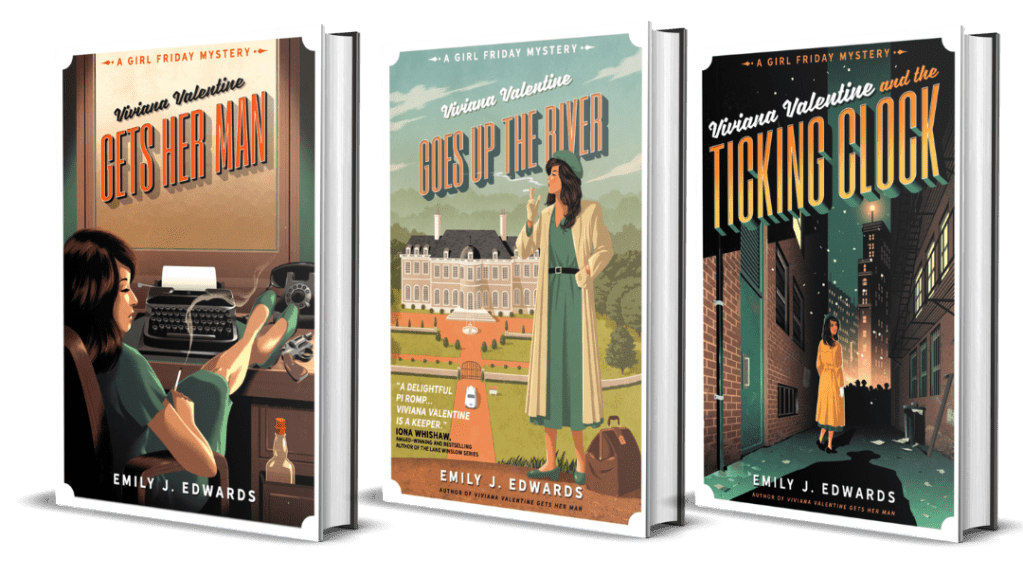
It can be difficult to reconcile writing mystery fiction with a distrust that swells over into contempt for the American “justice” system. As much as I try to write private investigators and amateur sleuths, at some point in most stories an author does have to involve an arresting officer. It is still a bit too far-fetched of a fiction to let a murderer face anything other than a formal reckoning with the law. Mystery fiction is often times the diametric opposite of fantasy. There is no magic, and bullets kill.
The role of police in private investigator stories is an adversarial one, as private investigators serve as a White Knight figure taking on corruption that, in the Middle Ages, was corruption of the Christian soul, but in modern times, is corruption of the public trust. There is contempt in a PI novel that a private license can usurp the power of a public badge. In a cozy, police exist as a voice of the Common Culture, to constantly remind the outsider cozy sleuth that he or she is not “appropriate” for the execution of justice. They simply do not have what it takes (masculinity, youth, education, a badge or license, what-have-you) to perform the task at hand. And then the cozy sleuth proves them wrong.
All of this leaves us with a third type of mystery story: the police procedural. I’ll admit to not reading or watching too many of these, though last week I wrote about finishing the latest in Louise Penny’s Chief Inspector Gamache series. That series is indicative of what is required if one wishes to write a police procedural story that is not copaganda:
The cop must be outside the culture of the police at large.
Gamache is often described as “looking like a history professor” and never carrying his force-issue weapon. In the first few books of the series, Penny describes him as gentle and compassionate with having four key statements to guide him through his role as a homicide investigator:
“There are four things that lead to wisdom. You ready for them?’
She nodded, wondering when the police work would begin.
“They are four sentences we learn to say, and mean.” Gamache held up his hand as a fist and raised a finger with each point. “I don’t know. I need help. I’m sorry. I was wrong’.”
This is not standard cop-issue stuff. While Gamache’s outsider nature started with his erudition and education (and has now coalesced into a rather grating and unbelievable plot of top-down domestic terrorism), other cop protagonists are outsiders in different ways. In Die Hard, John McClane is an outsider by the grace of being a New York City cop in an other-land– Los Angeles. He is not a part of the corrupt system and media environment of Tinseltown. In fact, he takes on the guise of a cowboy (Roy Rogers) in order to drive home his feeling of being a singular man, and only finds camaraderie in a Black male partner who has has his masculinity docked for an on-the-job mistake (Al shot a child, and that was something cops could get punished for in 1988). In Die Hard II, John is relatively alone in a liminal space– the airport, in a time before the Department of Homeland Security, the TSA, and the militarization of domestic air travel. In Die Hard With A Vengeance, John McClane is actually on leave without pay for his shitty behavior and, once again, gets a Black partner to take on German terrorists (Samuel L. Jackson doing the Lord’s work as Zeus, the cab driver, trying to keep his nephews safe). John McClane is a cop without a force, an outsider. He is far more analogous to a White Knight than a cog in the mechanism of the penal system.
(Those are the only three Die Hard films we acknowledge in this house.)
In In the Heat of the Night, Virgil Tibbs is a visiting cop– a police investigator from the predominantly Black city of Philadelphia traveling through a Klan Rally town in Mississippi. He is out of place due to race and out of place due to culture. He is out of place because of education. He is out of place by value systems and uncorrupted by the small-town organized crime that takes the guise of a factory owner in a factory town. Virgil Tibbs was so outsider that Sidney Poitier wasn’t nominated for an Oscar in the movie that helped define his entire career and the entire concurrent civil rights movement.
These are the solid, foundational tenets of an entire genre of story: overlapping with the Western, a law man struggles against corruption of the very force that gives him the power to stop corruption. Unlike a Western, there are witnesses to the law man’s struggle. Westerns require isolation. The cop in a police procedural mystery novel is doing his job for the whole world to see.
I am wracking my brain trying to come up with a movie or TV show made in the past five years or so in which a police officer is shown to be an outsider, and therefore shown to be the point of light in a police force darkened by prejudice and corruption. Three Pines, the television/streaming series based on Louise Penny’s books starring the luminous Alfred Molina, only lasted eight episodes before Amazon Prime yanked the plug in 2022. Bosch somewhat fits the bill, as he’s a renegade cop investigated by Internal Affairs, but it isn’t for anything particularly noble– he extra-judiciously murdered a criminal– and is othered as punishment for literally breaking the law. Brooklyn Nine-Nine certainly tried, but created a universe in which the police did not face overwhelming friction for their unrealistic approach to policing. Elspeth might be our current best bet, as the namesake character acts like a wacky Perry Mason, but Elspeth herself is cozy-coded for being a middle-aged female sleuth.
Unfortunately, thanks to our current policing culture, I do not believe there is even room in the zeitgeist for the concept of a good cop in television and film because it must acknowledge the reality of bad cops. Our media is our mirror, and what it is reflecting back at us is the powerful machinations of people at the helm– more post 9-11 hero worship of Blue Bloods than Columbo, more sci-fi crime fighting fantasy CSI than even the realistic pessimism of The Wire.
In October of 2004, just three weeks before the Boston Police Department deployed “non-lethal” projectiles into a crowd of revelers in the Fenway and ended the life of Victoria Snelgrove– then-Secretary of Defense Donald Rumsfeld gave a speech to the Council on Foreign Relations about crimes of war and torture that were committed by American service members and the intelligence community. In his remarks, Rumsfeld began using a phrase that has become constant when discussing American justice and American policing– the looming, existential threat of the “bad apple.”
By refusing to finish the idiom– that one bad apple spoils the whole bunch, a turn of phrase that goes back to at least the early 16th century and Geoffrey Chaucer’s “Cook’s Tale” in The Canterbury Tales– Rumsfeld created the perfect linguistic abdication of the responsibility of American law enforcement. The fact that one bad apple can and will spoil your entire food stores for winter, leaving your household and community to starve was replaced with the innocuous threat of a moldy fruit in an era where apples are constantly available and imported by the truckload. What is the threat of one bad apple, if you can go to the store and just get another? One bad apple, in the conservative mind, has no consequences.
Of course, this view of policing has led to what the Cook told us it would in the 1500s: the batch has spoiled. We no longer believe that when we reach into our bushel, we can pull out a crisp and tasty fruit. Mystery literature used to allow for a singular, incorruptible good apple, but that innocence is gone. We have seen– time and time again, on screens of every size– the known consequence of festering rot. When we saw it last week, and when we see it again next, we will know what it is. It is the corruption of power, the decay of decency, and the breakdown of even the pretense of civility.
It is what policing has always been, and what we used to be able to warn about in stories.
 msemilyedwards.com
Leave a comment